5 Signs Your Tree Needs to Come Down
How to spot the warning signs of a failing tree before it fails on your house, your car, or your family.
Trees don't fall out of the blue as often as people think — they usually give you signals for months or even years first. The problem is that most homeowners don't know what to look for. Here are the five most common red flags our arborists see on jobs across the Carolinas.
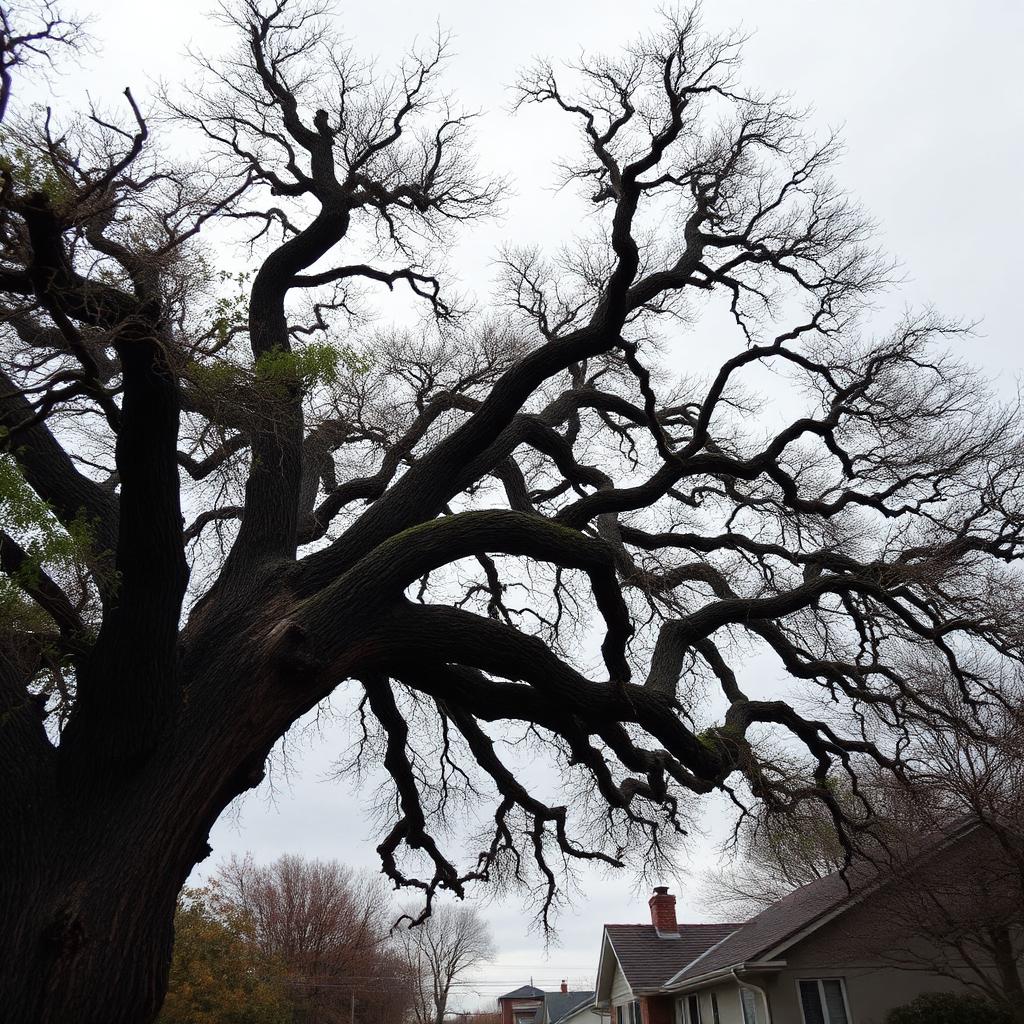
1. Large dead branches in the canopy. A tree with more than about a quarter of its canopy dead is in serious decline. Dead limbs that are more than a few inches thick can kill or seriously injure someone below when they drop. If you can see bare, gray branches sticking above the leafy portion of the tree, that's a warning sign.
2. Mushrooms or conks at the base of the trunk. Fungal fruiting bodies on the trunk or root flare almost always mean internal decay. The wood inside may already be hollow. From the outside, the tree can still look healthy — until a windstorm proves otherwise.
3. Cracks or splits in the main trunk. A vertical crack that runs a significant portion of the trunk is essentially the tree telling you where it's going to split apart. This is especially dangerous on trees with heavy leans or forked trunks.
4. A sudden lean or lifted soil. If a tree that used to be upright is now leaning, or you can see the soil on one side lifting up like the roots are pulling free, do not wait. That tree is failing right now.
5. Extensive trunk damage. Old wounds, missing bark, or damage from lawn equipment, lightning, or previous storm hits create entry points for decay. If more than about 25% of the trunk's circumference is compromised, structural integrity is questionable.
None of these signs automatically means a tree has to come down — but all of them are worth having a certified arborist look at. A free inspection takes about 15 minutes and can save you tens of thousands in property damage. When in doubt, get eyes on it.